
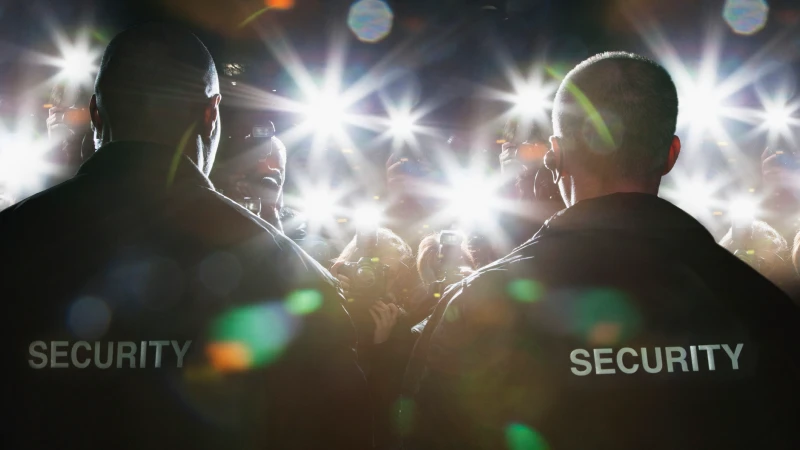
Providing front-line protection is already a difficult task, but doing it in a crowded environment is a different beast altogether. You need strong situational awareness, clear communication, and the ability to adapt as conditions change. Whether you’re supporting a VIP at a public event or escorting a client through a busy venue, your positioning and movement skills must be well honed to manage risk and maintain professional coverage.
Crowded areas: Hard mode for security professionals
You don’t have to be a protective services veteran to know that crowded environments present unique challenges for security professionals. The limited visibility, unpredictable movement, excessive noise, and constricted access make it difficult to identify potential threats or respond quickly to an emerging problem.
Even without a security threat, congestion can create separation risks, block access routes, and increase the chance of accidental contact or injury.
To make things worse, crowded areas put a lot of eyes (and cameras) on not just your protectee, but you and your team as well. As such, you also need to balance protection with professionalism. An overly aggressive approach can create unnecessary alarm and paint you in a poor light. The difficulty and complexity of security situations in crowded areas mean you need special, well-developed skills to provide effective protection.
Close-in positioning and mobile protective coverage in crowded environments
Effective close protection in crowded environments depends on three priorities: maintaining awareness, managing proximity, and adapting to the people and conditions around you.
Maintain appropriate close-in positioning
At all times, your position should facilitate awareness, communication, and the ability to respond to evolving (and devolving) conditions. The appropriate distance and placement depend on the client’s needs, the environment, the assignment, and the team’s procedures.
Avoid the instinct to focus exclusively on the person you’re protecting; tunnel vision increases risk in security situations. You must also monitor the surrounding environment, including crowd movement, changes in access, and developing congestion. Regularly reassess your position rather than assuming the original arrangement will remain suitable.
Similarly, don’t attach yourself to the protectee at the hip. Your presence should be professional and proportionate, maintaining effective protective coverage without unnecessarily obstructing the client or drawing attention to your security team.
Adapt your movement to crowd conditions
Moving through a crowd requires patience, coordination, and above all, clear communication. Avoid the instinct to prioritize speed; rushing can increase the risk of falls, collisions, and separation, particularly in confined spaces.
Before moving, understand the destination, available routes, and any known access restrictions. Coordinate with other team members and relevant venue personnel so everyone understands the movement plan. Should conditions change, prioritize safe movement over maintaining a rigid schedule. If congestion makes a route unsuitable, pause if safe to do so and reassess the available options.
Maintain mobile protective coverage
Your protective coverage must adapt as the client moves between entrances, corridors, event spaces, and vehicles. A position that works in an open lobby may be unsuitable in a narrow passage or dense crowd.
Clear and concise communication is key here. Team members should understand their responsibilities, share relevant observations, and communicate changes that could affect the protectee’s safety.
Important considerations include:
- Situational awareness: Monitor crowd behaviour, environmental changes, and potential hazards without becoming fixated on one person.
- Team coordination: Follow established communication procedures and clarify responsibilities before movement begins.
- Route awareness: Study the planned route beforehand and identify suitable alternatives in case access becomes restricted.
- Client comfort: Maintain professional conduct and avoid unnecessary physical contact or disruption.
Improving your ability to protect in a crowd
Strong front-line protection skills develop through practice, feedback, and continued education.
Practice observation and situational awareness
During training exercises, learn to notice changes in crowd density, movement patterns, visibility, and access.
Develop your communication skills
Clear instructions, concise updates, and active listening help you coordinate with teammates and venue personnel, especially in noisy environments.
Seek professional close protection training courses
Practical instruction delivered by trained security professionals will improve your movement awareness, protective positioning, teamwork, and risk assessment skills while teaching you sound decision-making under pressure.
Aspis Training Center provides both beginner and advanced security training courses that include all the skills you need to improve your ability to protect clients in crowded areas. We’ll train you to deliver effective front-line protection in even the most difficult environments so that you can better market your skill set and put demanding clients’ minds at ease.
Contact us today to learn more about our available courses.